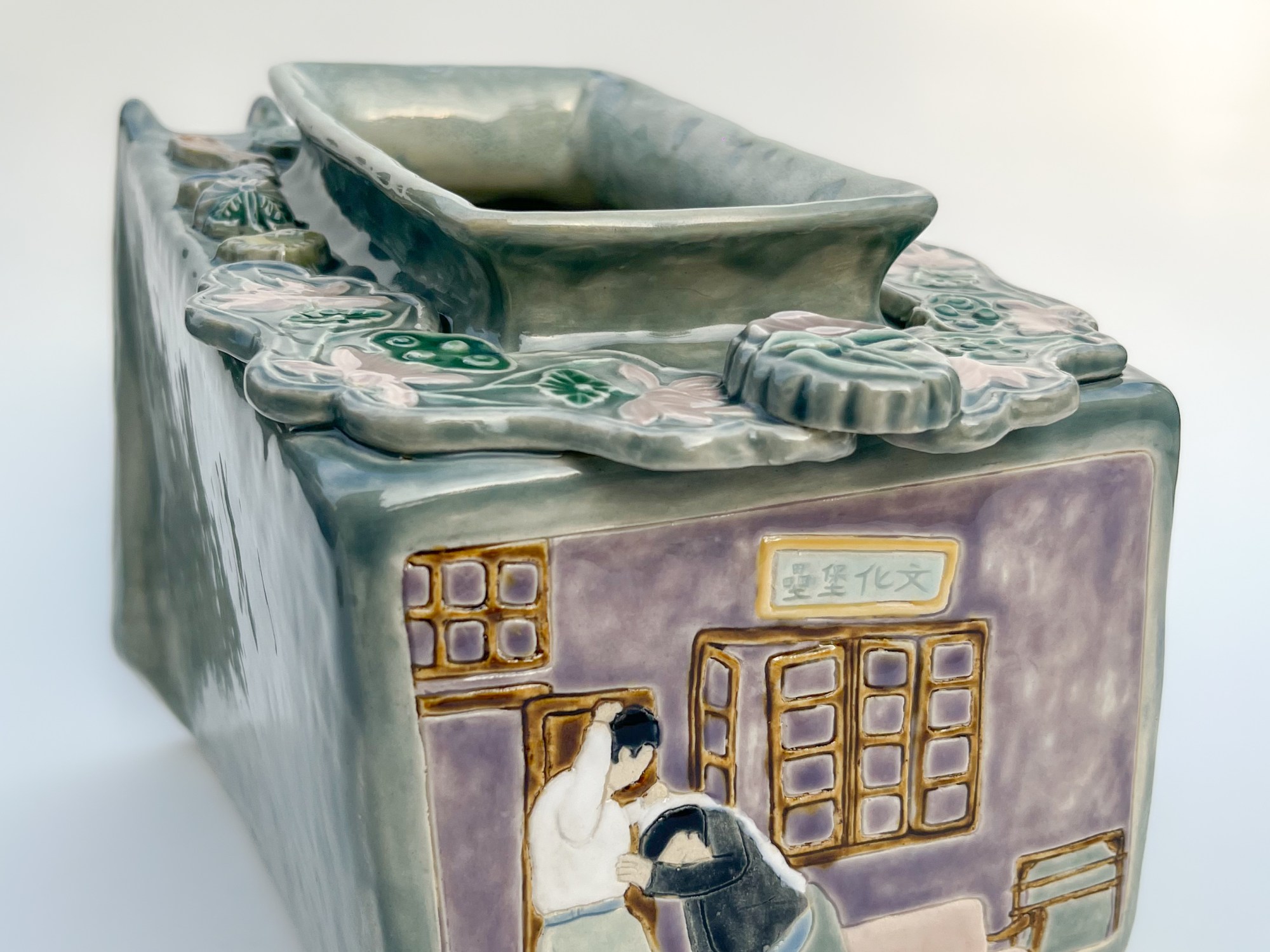
Fragments of Performance
2025
Ceramic
26.5 x 18 x 19 cm
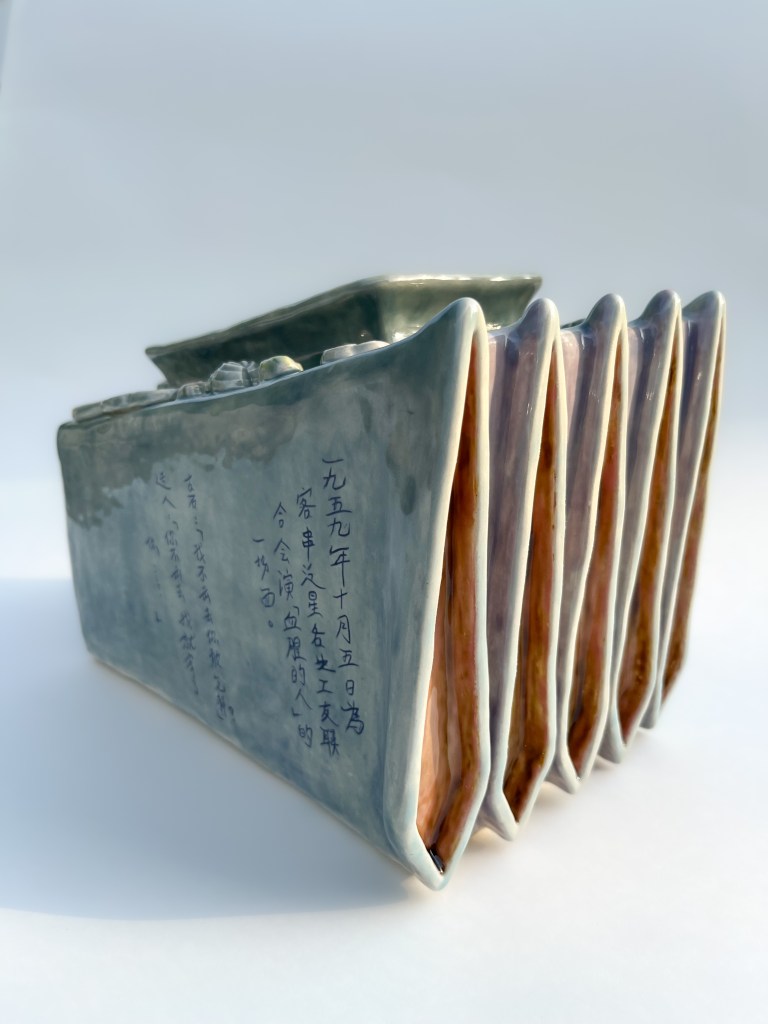
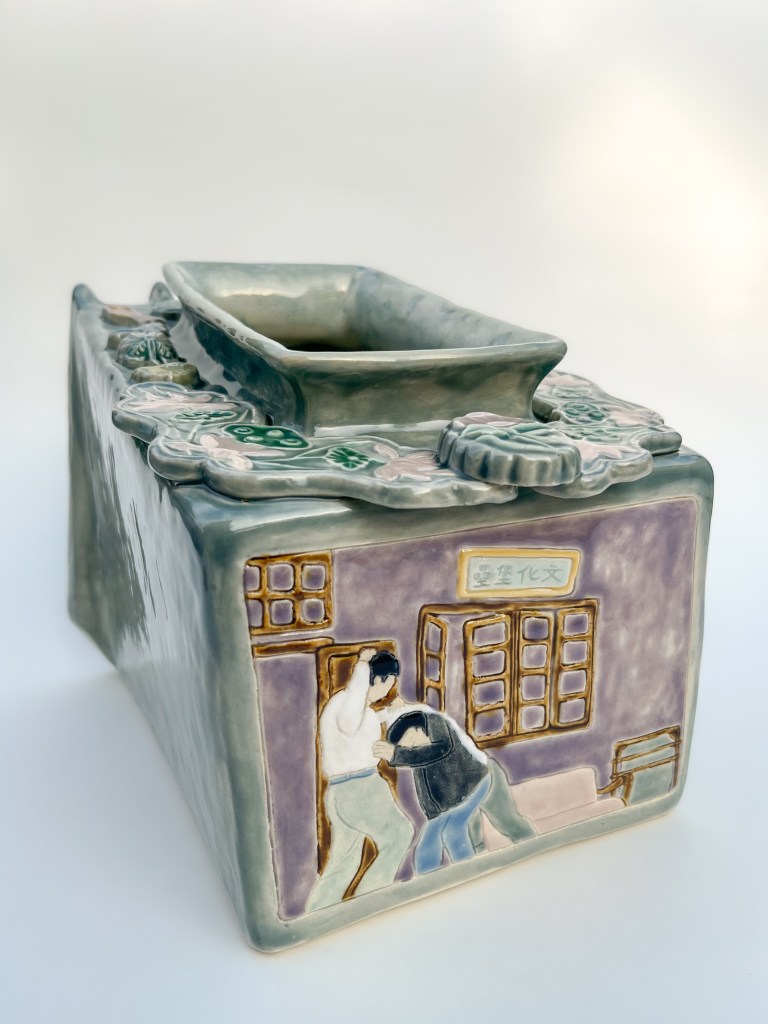
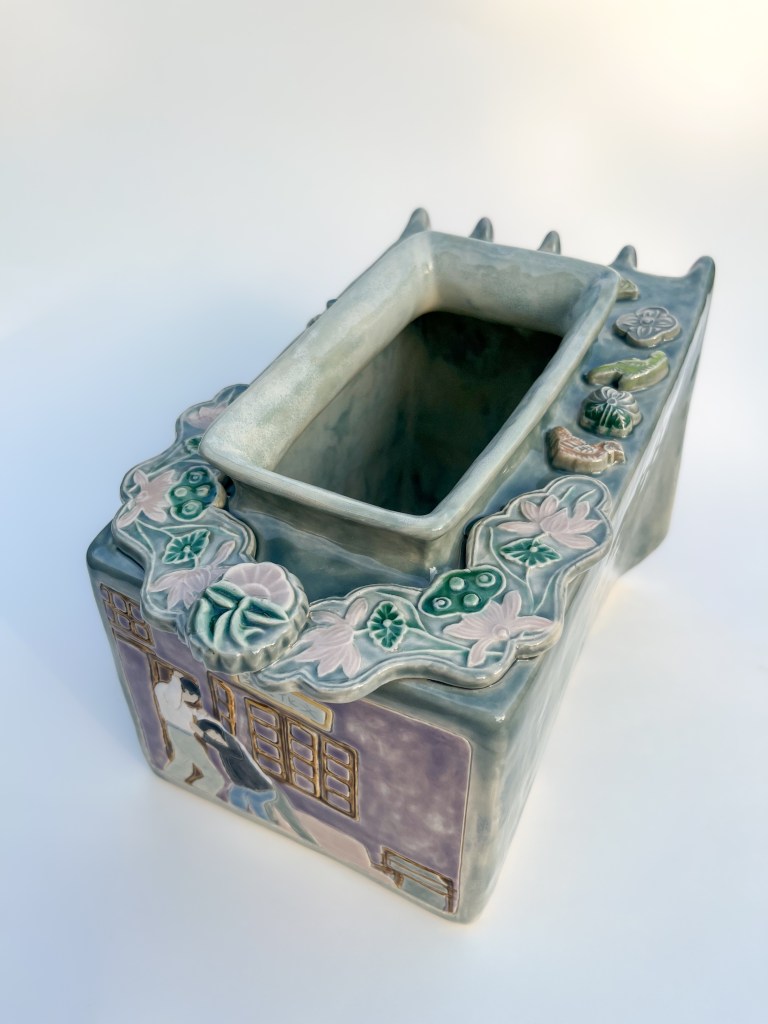
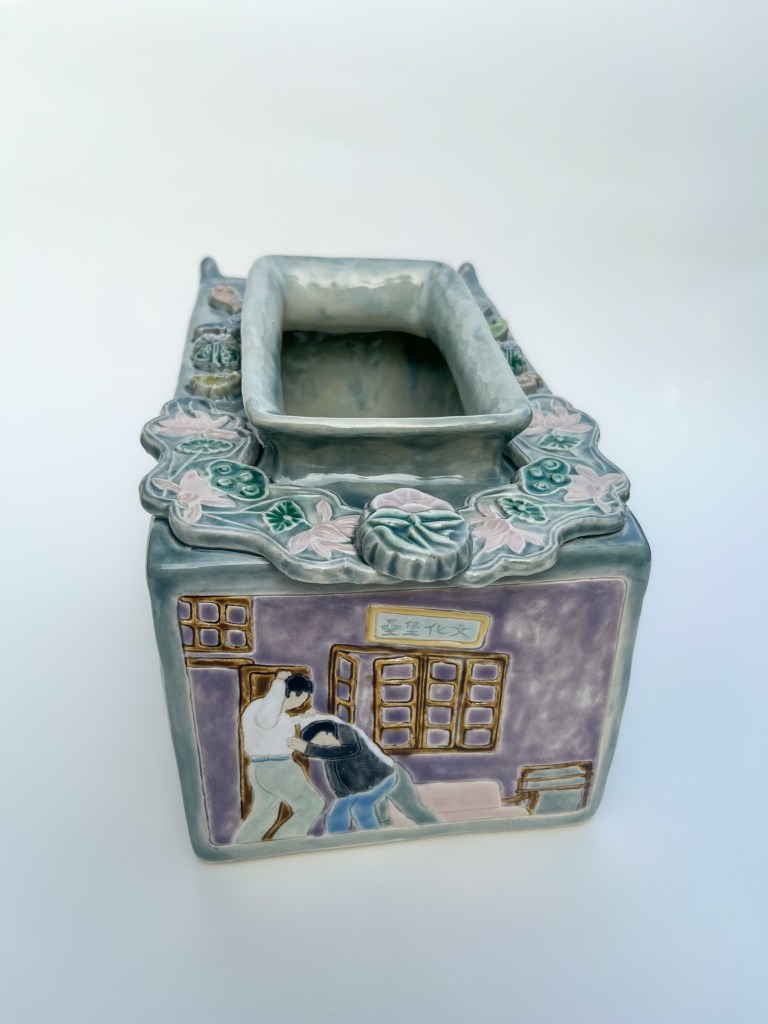
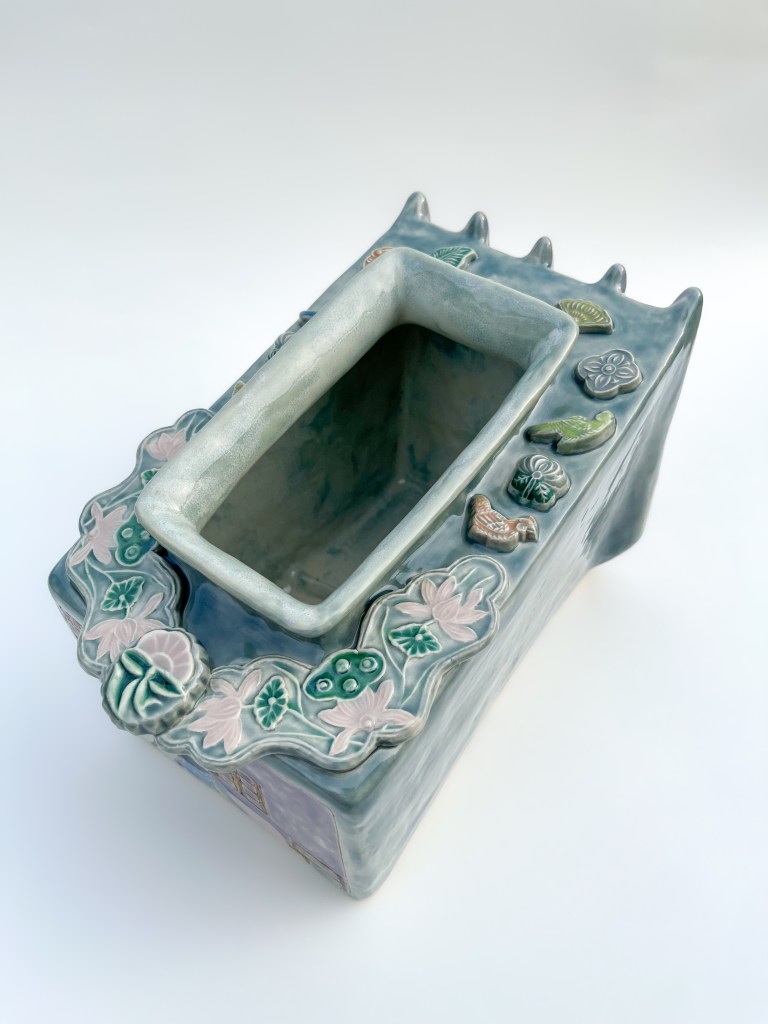
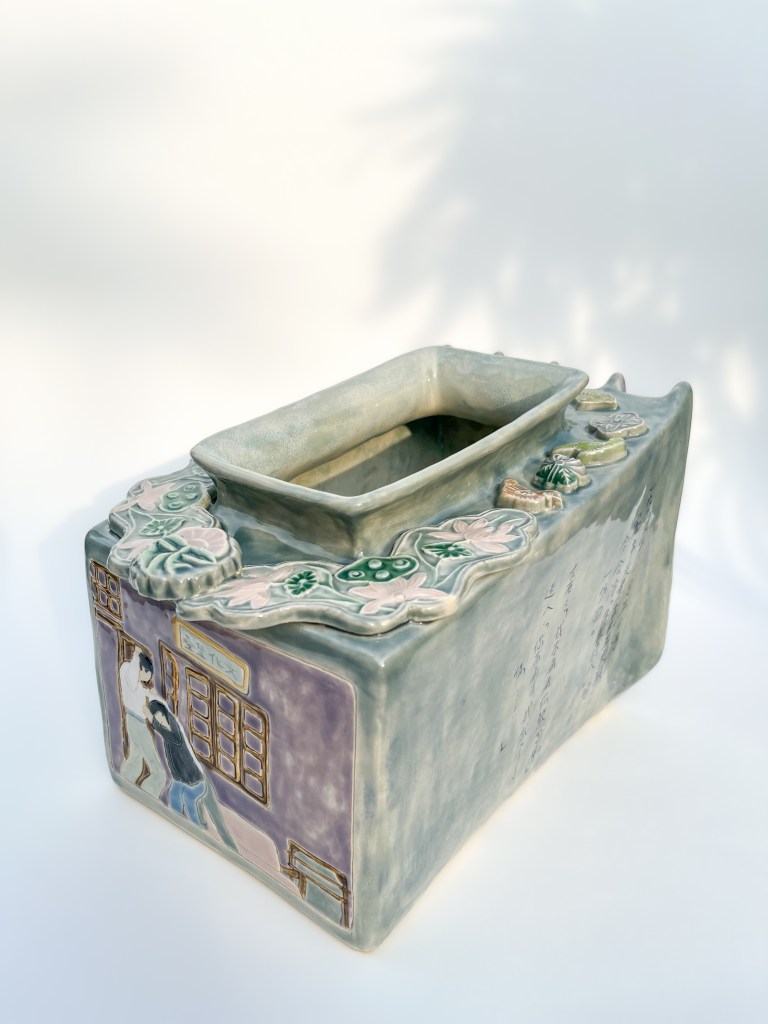
This ceramic vase draws inspiration from the former Singapore National Theatre and a 1959 photograph of a stage play directed by my grandfather. Opened in 1963, the National Theatre was a post-independence cultural landmark. First announced in 1959 to commemorate Singapore’s attainment of self-government, it was largely funded through public donations, reflecting collective pride and a shared commitment to the arts.
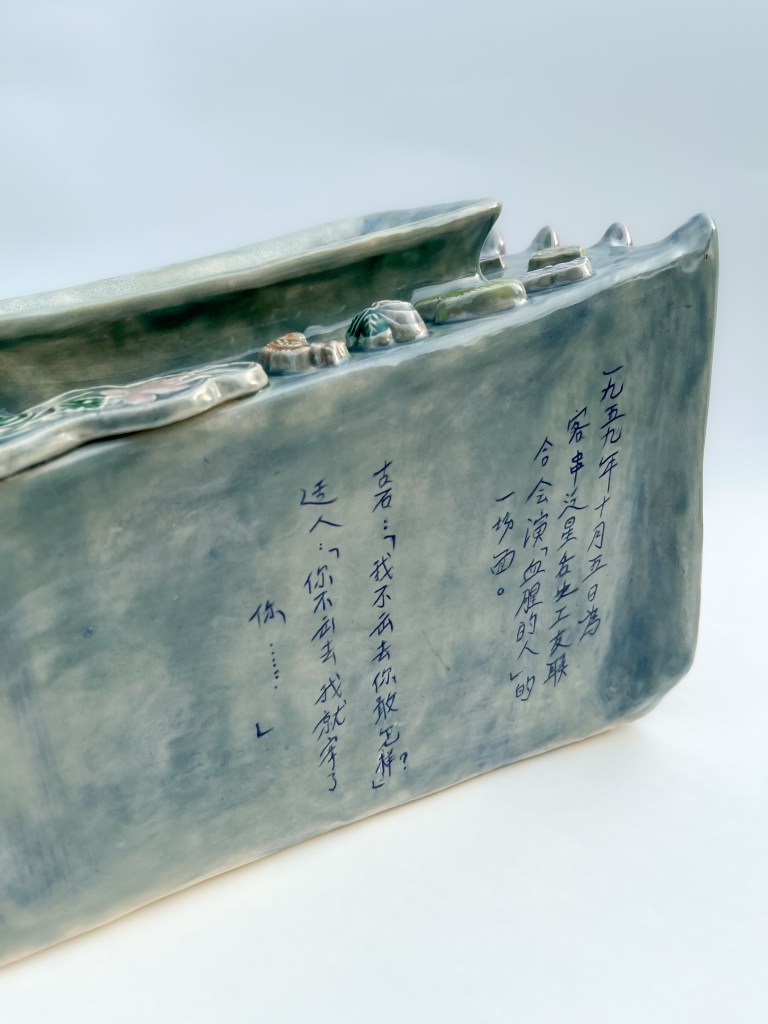
Its most distinctive architectural feature, the five vertical diamond-shaped bays on its facade, has often been interpreted as symbolising the five stars on the Singapore flag. While this was not the architect’s original intention, the association reflects how the building came to represent the ideals of a young, self-governing nation.
The drawing traced onto the vase is based on a dramatic fight scene from a play my grandfather directed in 1959, during his time as a People’s Action Party (PAP) branch volunteer. That same year, the PAP, still in opposition, won a landslide election victory. It was a time of political transformation and civic energy. Grassroots performances like the one my grandfather led reflected a spirit of participation and public storytelling that paralleled Singapore’s search for identity.
This hopeful moment contrasts with 1963, the year the National Theatre was completed. That year, more than 100 politicians, trade unionists, journalists, and student leaders, including ex-PAP politicians from the left-wing faction, were arrested and detained without trial under Operation Coldstore. These detentions silenced many voices that had contributed to the anti-colonial movement and early civic life, marking a shift in the country’s political climate.
I chose this scene not only for its theatrical intensity but because it reveals a lesser-known part of Singapore’s cultural history. Alongside traditional forms like wayang kulit, getai, and Chinese opera, the late 1950s and early 1960s saw a growing scene of modern stage plays in English, Chinese, Malay, and Tamil. These productions tackled local stories and social issues, adding depth to a diverse and evolving theatrical landscape.
By tracing this image onto clay and incorporating elements inspired by the National Theatre, this work connects family history with Singapore’s theatrical and cultural heritage. It reflects how performance and activism were deeply intertwined in shaping the country’s early cultural and political landscape. This piece honours my grandfather’s involvement as someone who, like many others of his time, contributed to Singapore’s evolving cultural and political fabric.
 Shayne Phua