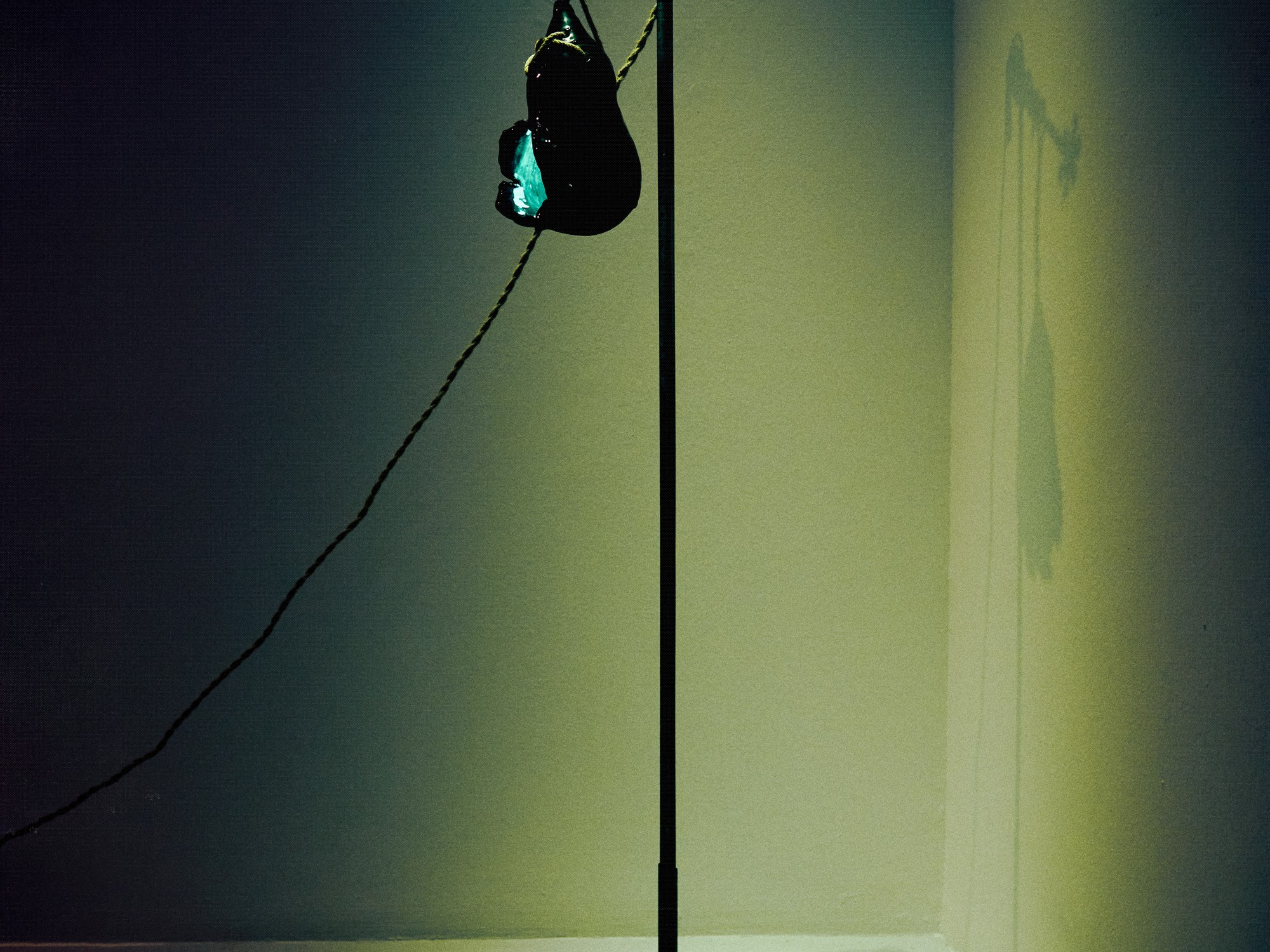
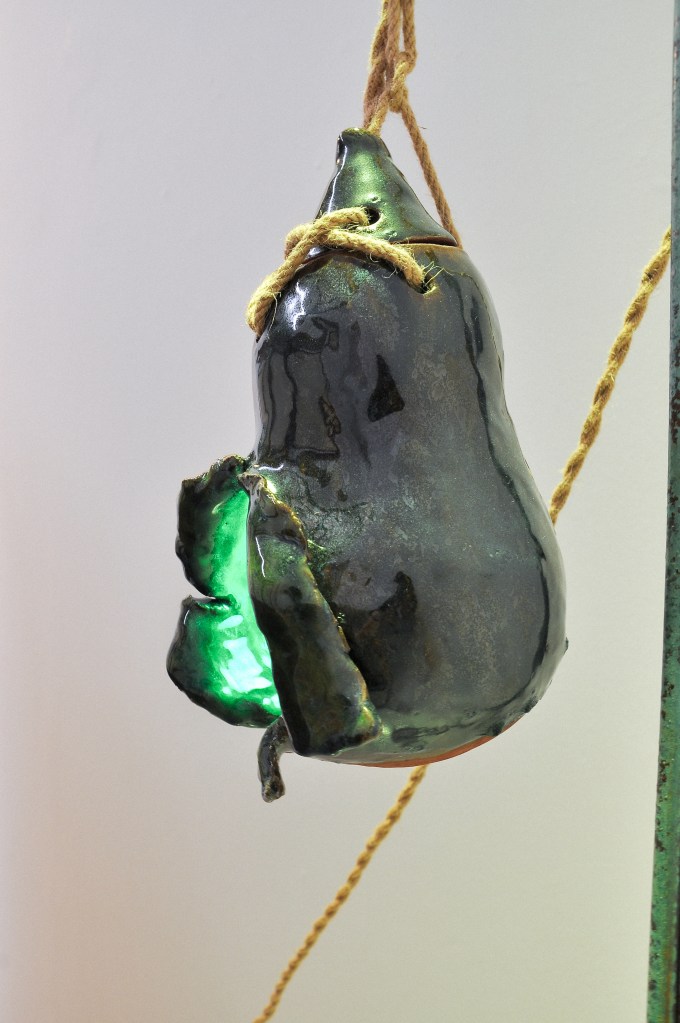
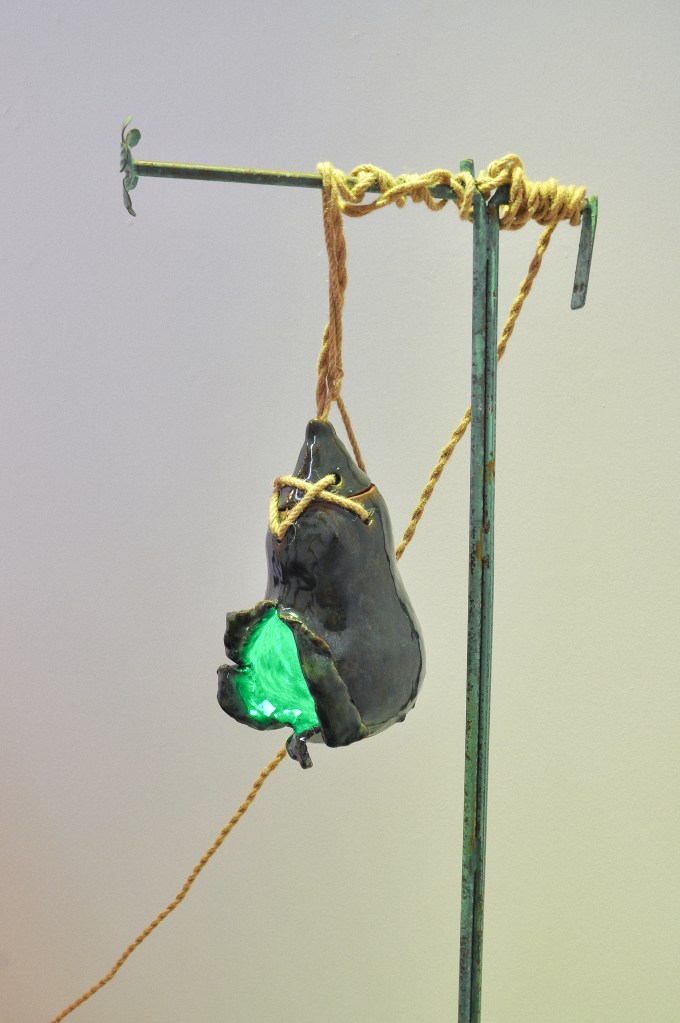
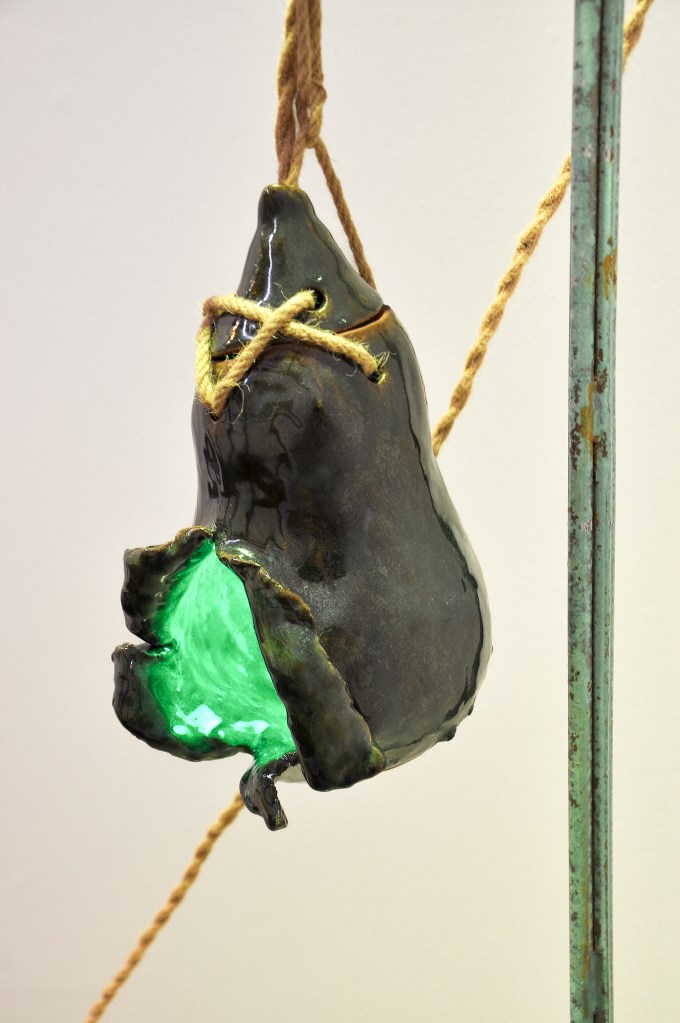
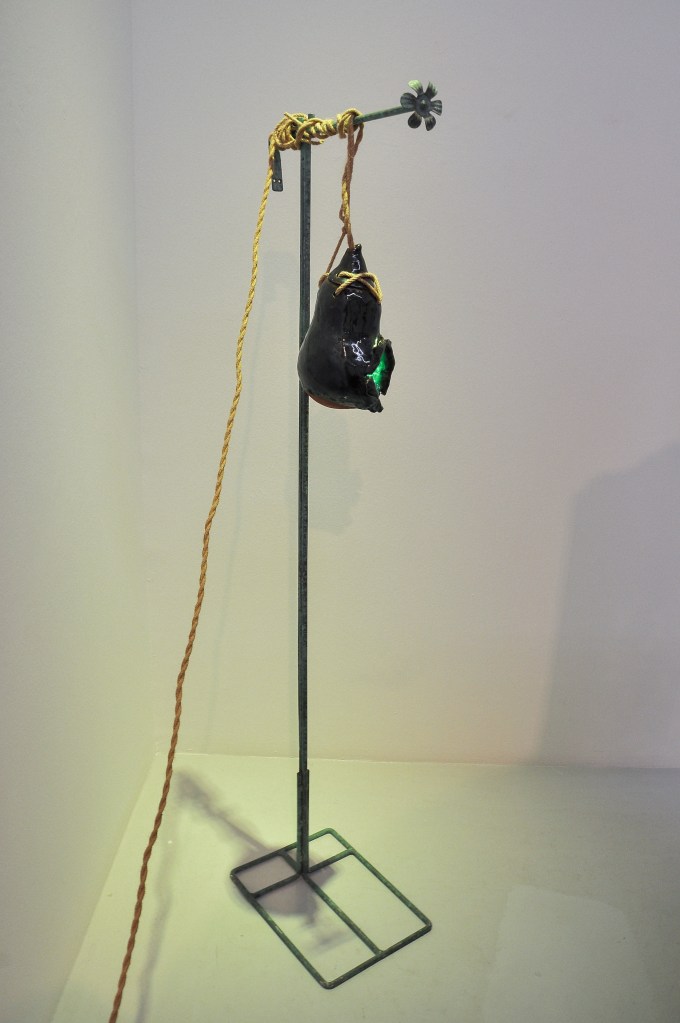
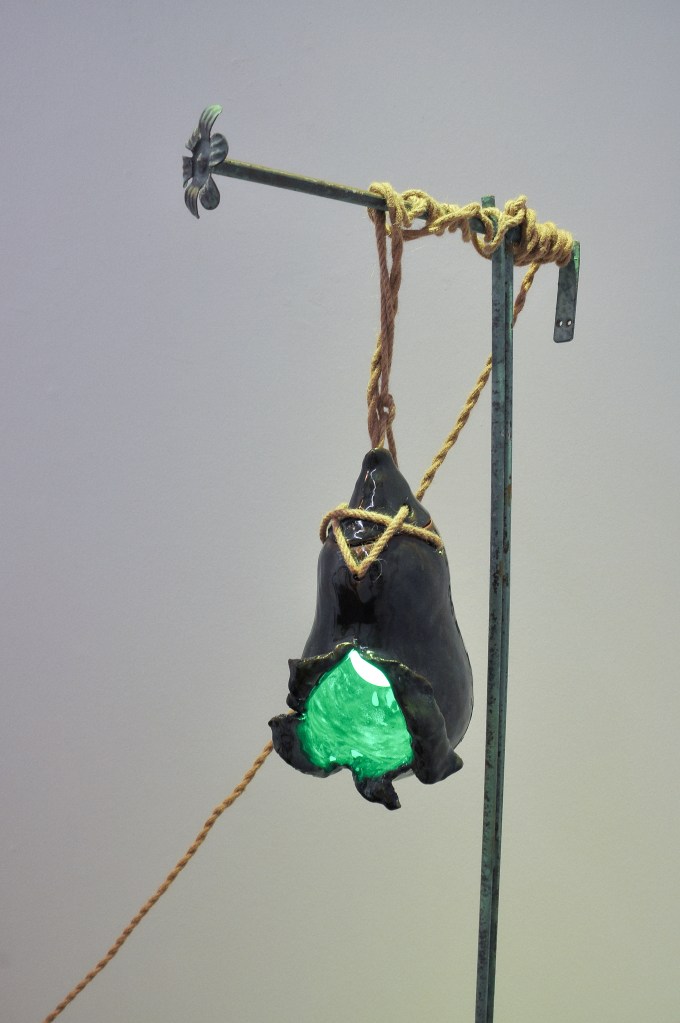
Goujian was a king of Yue, a state in southern China, who reigned in the fifth century BCE. He was captured by the neighbouring kingdom of Wu, and forced to serve the Wu suzerain for several years before being released. Upon resuming his former kingship, Goujian eschewed the good life and instead lived like a peasant, a constant reminder both of the humiliations he suffered during captivity and the need to avenge his debasement. As legend has it, one of his more extreme methods of self-mortification was the regular consumption of bile from a gallbladder – a well-known narrative that has become a morality tale extolling discomfort and endurance as a means to personal redemption. (The ancient Chinese historian, Sima Qian, among others, records the story.) Here, creating ceramic works in the form of a gallbladder is characteristic of Phua’s sense of whimsy; for her, the organ simply resembles a lampshade, and the juxtaposition of the visceral nature of the narrative and the innocuous utility of the object is where the fun lies. (Text by Louis Ho)
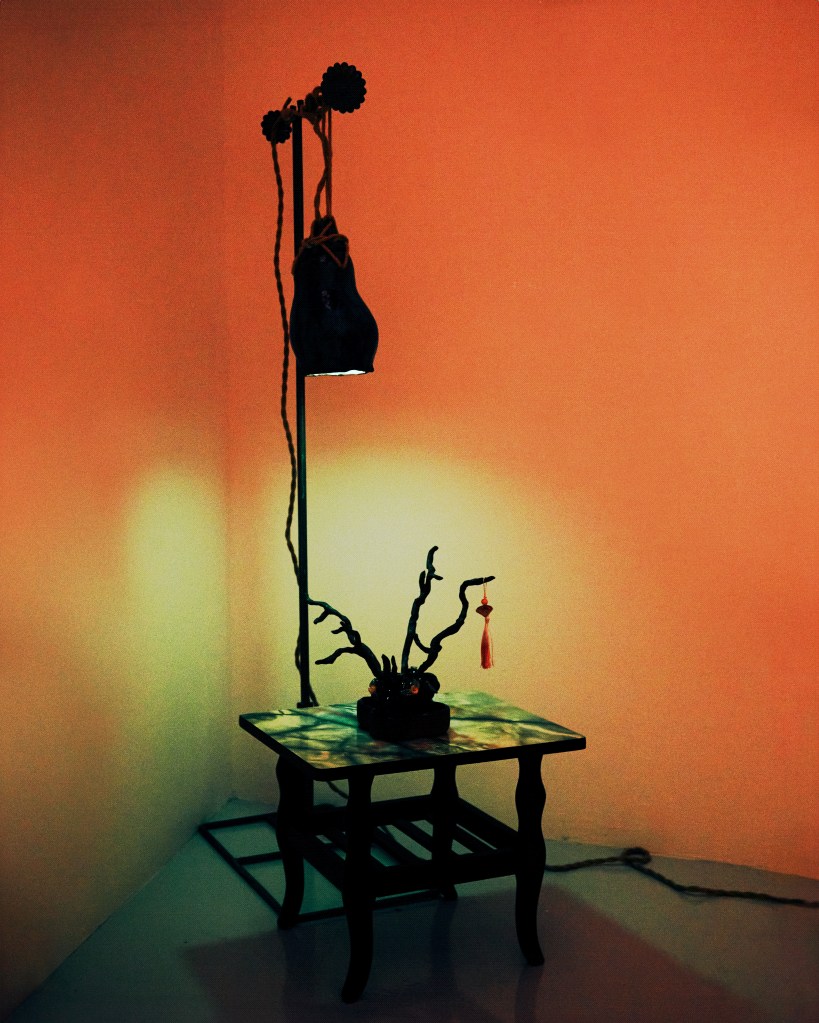
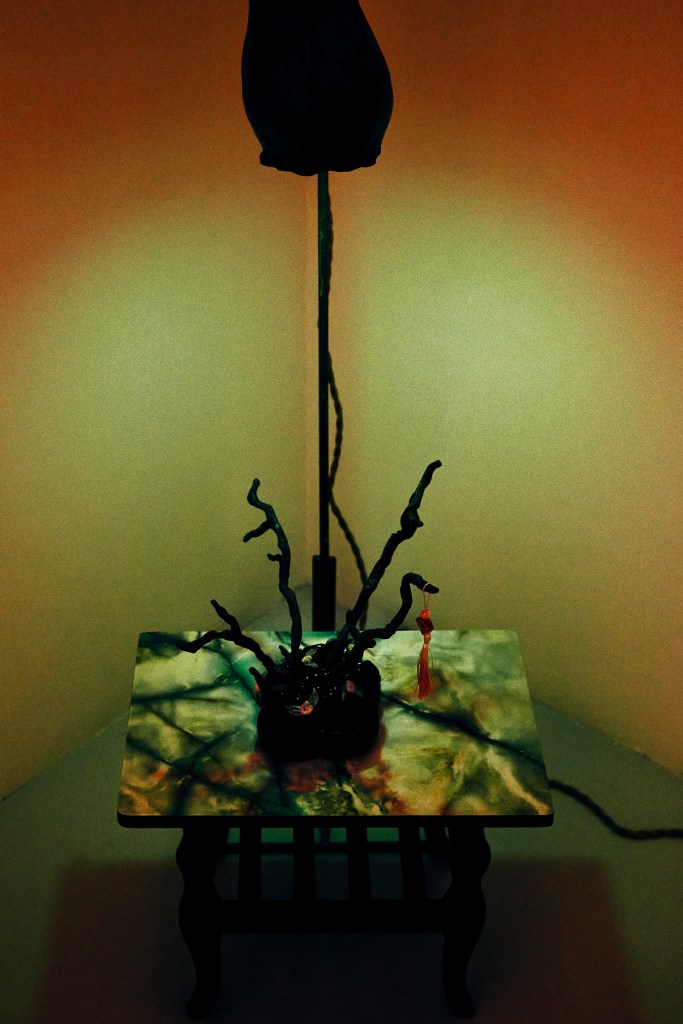
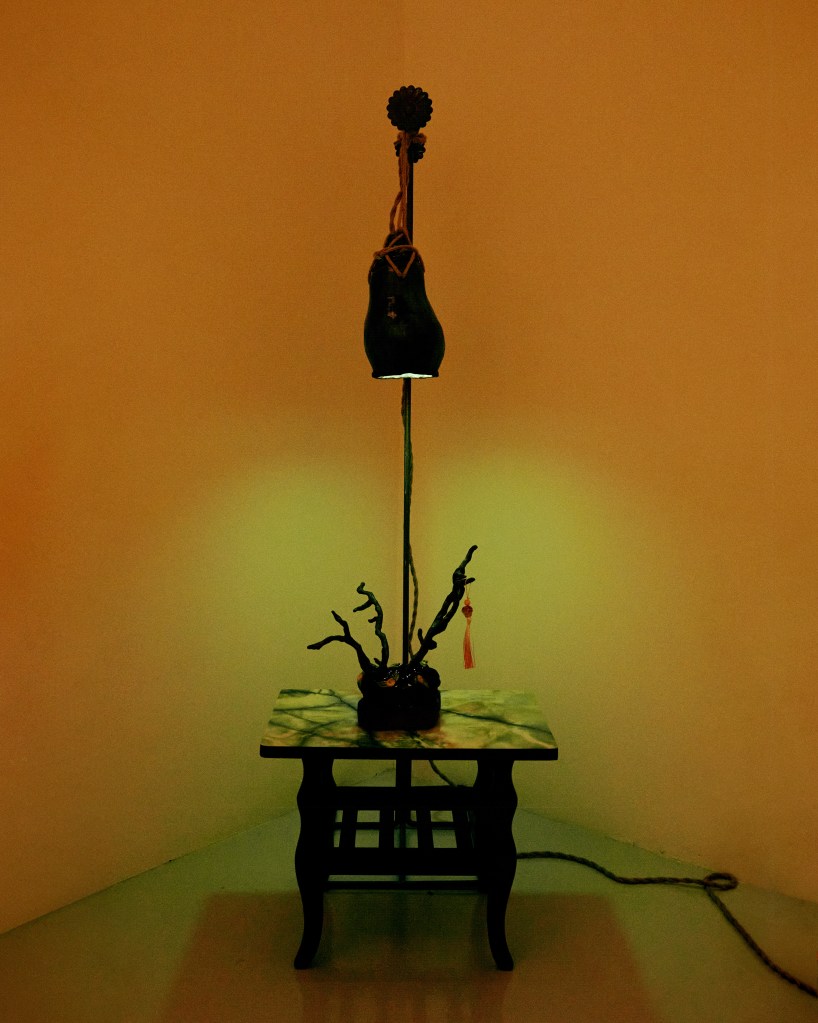
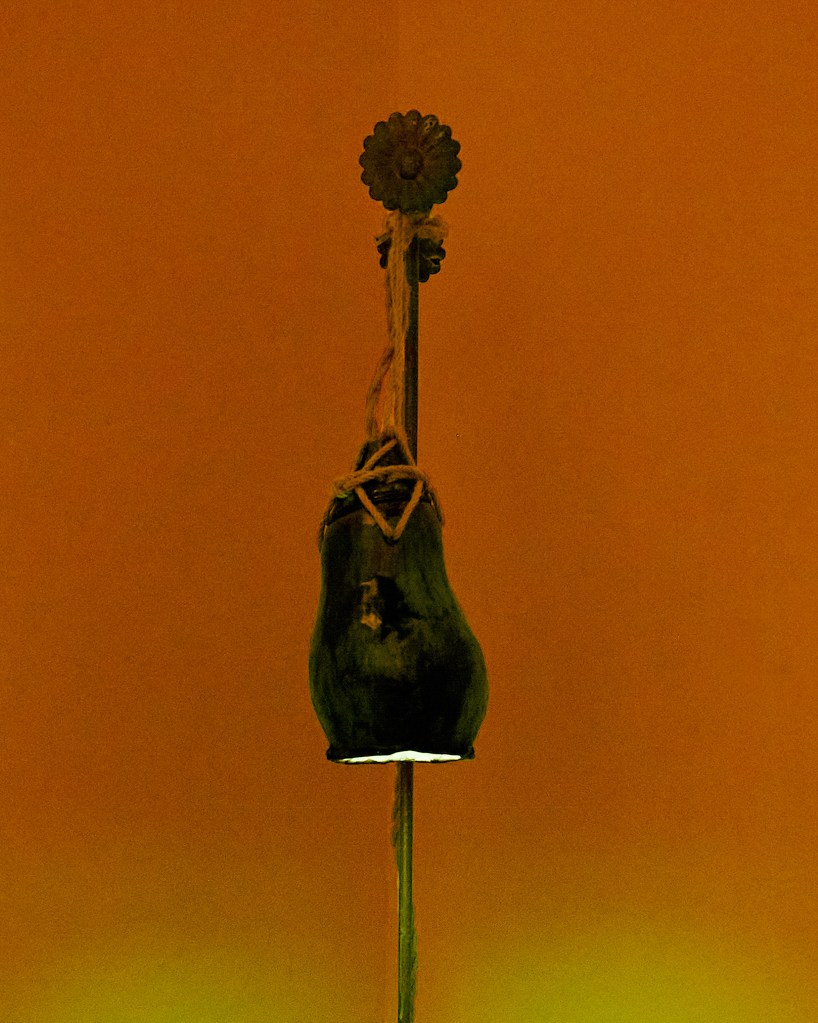
Photography: Jon Blu @bokehture
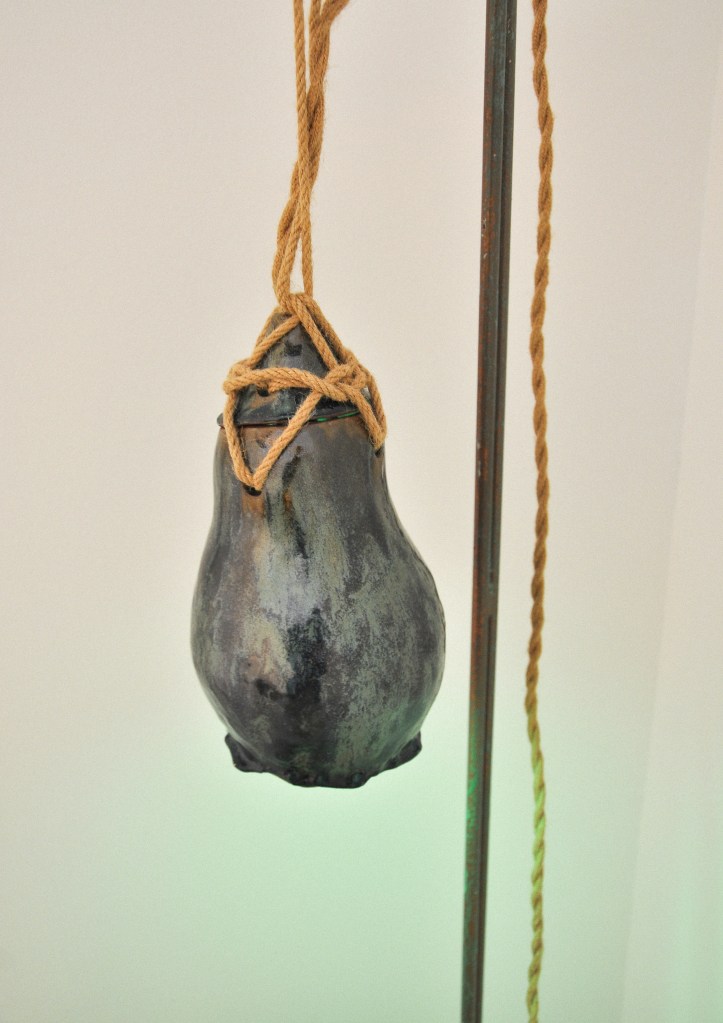
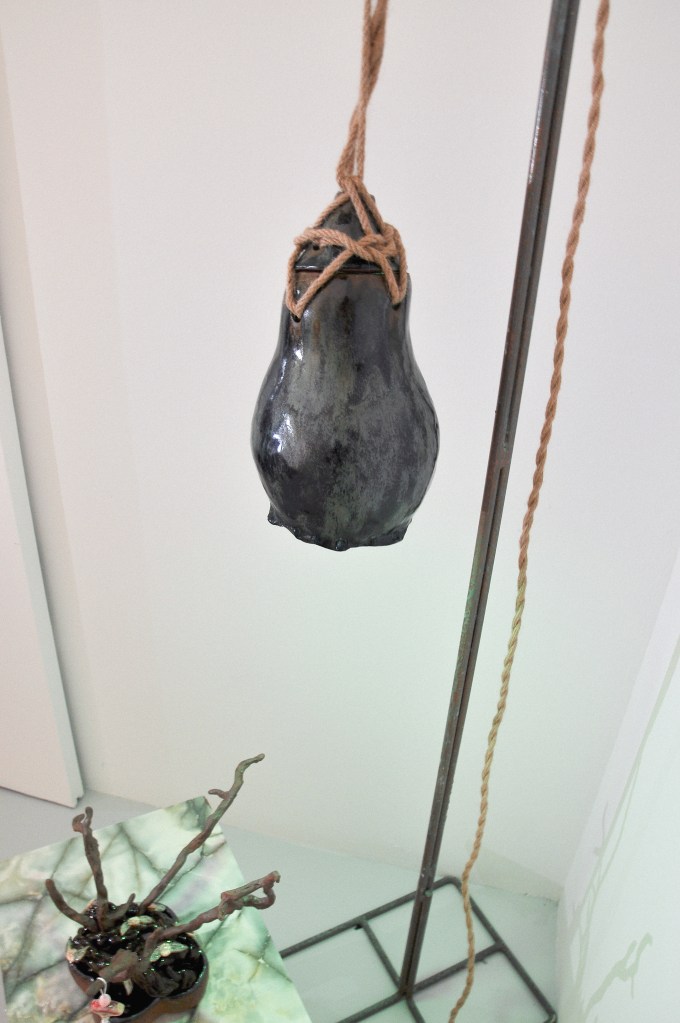
Photos by Shayne
I love working all day, every day I
2024
Medium: Ceramic with light bulb, cord, rope and metal stand
27 x 16 x 16 cm
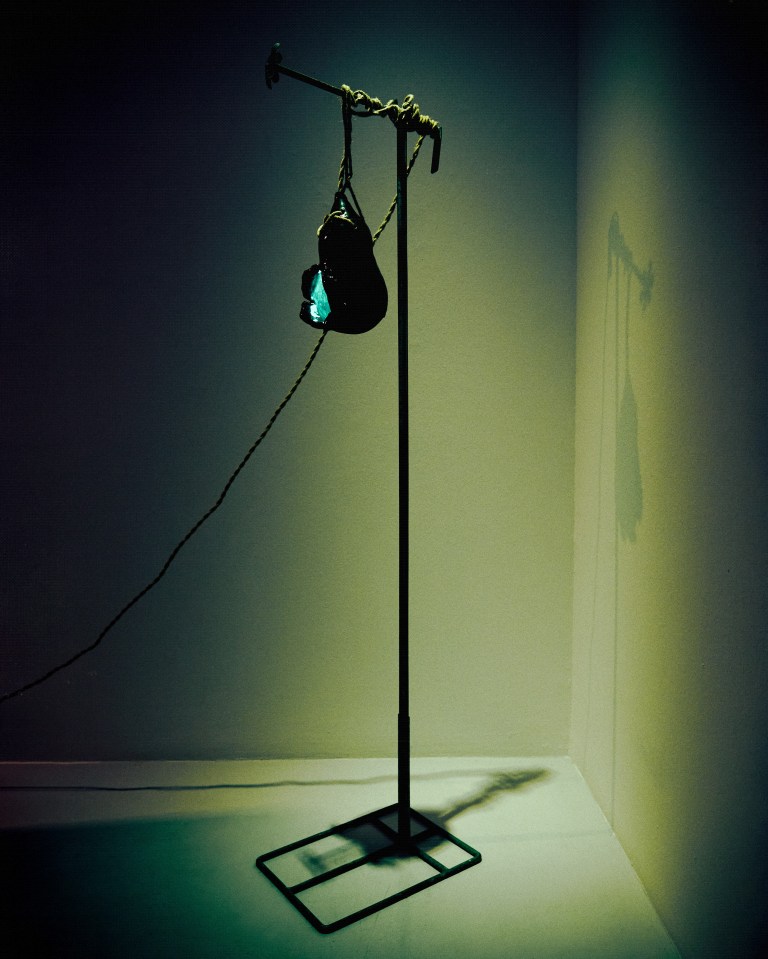
Photography: Jon Blu @bokehture
Photos by Shayne
I love working all day, every day II
2024
Medium: Ceramic with light bulb, cord, rope and metal stand
28 x 17 x 17 cm
 Shayne Phua